
August 20, 2026
Stop at the intersection by Howe Convenient Market, the gas station and store a Howe family has run since 1919, and ask someone where to swim this weekend. You will not get one answer. You will get a follow-up question: which lake do you mean.
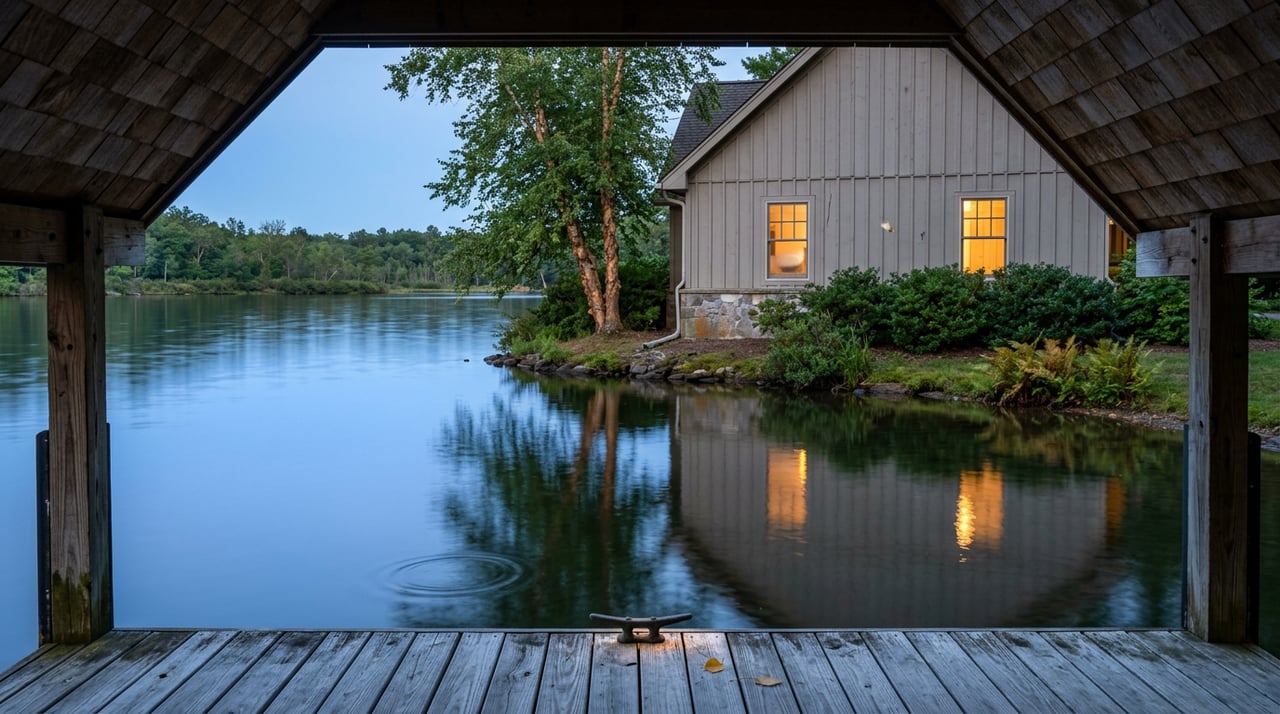
That's the strange thing about living in a village named for a body of water most residents have never waded into. Lake Ariel, the actual lake, isn't where anyone launches a kayak on a Saturday morning. The swimming happens somewhere else. The boating happens somewhere else. The lake that gave the town its name spent the back half of the twentieth century being something quieter than a beach town, and most of what fills a summer weekend here now sits a few minutes down the road from it.
For decades, Lake Ariel actually was the destination. Lake Ariel Park operated on its shores from the late 1800s into the twentieth century, pulling in as many as 10,000 visitors on a single summer weekend, according to local historical accounts. The park had a rollercoaster called the Cyclone, a carousel, a waterslide, plane rides, and a beach where people swam and boated. It was, by every account, the reason people came to this corner of Wayne County at all.
Then a run of hurricanes and hard winters closed it down in the early 1950s. The Lake Ariel Hotel that had grown up around the park's popularity stood empty for decades afterward and wasn't torn down until 2011. The park itself never came back. What's left of that era downtown is really just Howe's and the Wayne Garage, a body shop built in 1915 that's still in business.
So the lake that lends its name to the village has been, for most of the last seventy years, mostly a backdrop rather than a beach.
Ask around and you'll hear names that don't show up on the sign coming into town: Roamingwood, Deerfield, Wildwood. These are the private lakes tucked into the hills around Lake Ariel, and they're where most of the actual boating and swimming in the area happens now. If a neighbor texts you to meet at the lake this weekend, there's a real chance they don't mean the one the post office is named after.
That's worth knowing if you're new here, because it changes what "living on the lake" even means locally. It rarely means the literal Lake Ariel. It usually means one of these smaller, quieter waters that took over the recreational role once the park closed.
A few miles from the village center sits a lake with the opposite problem: too protected to swim in at all. Lake Lacawac is a 52-acre glacial lake inside the 550-acre Lacawac Sanctuary, and it was declared a National Natural Landmark by the Department of the Interior back in 1966, specifically because it remains almost untouched by development. The only way to reach it is on foot, by way of the Lake Lacawac Trail, one of six public trails that together add up to more than eight miles across the property, and all of them are open daily from dawn to dusk at no charge and allow leashed dogs.
The sanctuary itself sits along Lake Wallenpaupack, so the property actually touches two very different kinds of water: the working, boat-heavy lake most of the region is built around, and the sealed-off glacial pond that exists specifically because nobody is allowed to touch it. At the center of the grounds stands a National Historic Register complex known as the Adirondack Great Camp, built in 1903 as a summer residence and hunting lodge. The sanctuary just wrapped its 11th Annual Farm-to-Plate Dinner there on August 8, drawing residents and honorees to the same historic estate for a benefit that funds the research and education work happening on the property year-round.
Between the two, most of a Saturday's water time in Lake Ariel splits along a line nobody drew on purpose: swim at the private lakes, look but don't touch at Lacawac.
For the part of the day that isn't about water at all, the default stop is Claws 'N' Paws Wild Animal Park, a few minutes out on Ledgedale Road. The Hall family started it in 1974 with one trail and 18 species of animals. Over five decades it's grown to more than 120 species across its developed acreage, out of 94 total, with the rest held in reserve for future expansion. It's a hands-on place by design: you can hand-feed lory parrots and giraffes, walk through a petting zoo with goats, deer, and sheep, and let kids dig for fossils in the Dino Dig. It runs seasonally, typically late April through late October, so this is very much still the window for it.
For dinner, the village's small footprint of restaurants punches above its weight in variety. Nurnberger Bierhaus serves traditional German cooking out of a family-run kitchen on Lake Ariel Highway. A few miles over, Polish Bites turns out kielbasa, pierogi, and borscht in a space with both indoor and outdoor seating. And Twin Rocks Diner has been serving locally-bought meat and homemade pies since 1976, the kind of place where the waitress remembers your order from the last visit.
Which brings the day back to where it started. The literal Lake Ariel, the one without a beach or a marina anymore, isn't unattended. It's cared for by a volunteer group called the Lake Ariel Nature Club, a multi-generational effort that pulls overgrown lily pad roots out of the water, collects trash from the shoreline, plants native species, and installs bird nesting boxes. The club also runs sunrise paddling trips and educational events, including tadpole and perch releases, on the same water the old amusement park once drew crowds to. That work helped the community earn certification as a National Wildlife Federation Community Wildlife Habitat, and by most accounts it happened within about a year of the effort starting.
So the lake that names this village isn't a place you visit for an afternoon swim. It's closer to a shared restoration project, tended by hand by the people who live around it, while the actual swimming happens at Roamingwood or Deerfield or Wildwood, and the actual lake tourism happens at a glacial pond you can only view from a trail.
That's a strange arrangement on paper. In practice, it's just Saturday in Lake Ariel: a trail walk past a lake you can't enter, an afternoon with more animal species than the village has restaurants, dinner that might be German or might be Polish depending on the week, and somewhere in the background, a handful of neighbors pulling weeds out of the water this whole place is named for.
If you're thinking about what it actually takes to buy or sell in a village built around this many different kinds of water, from private lake associations to protected preserve frontage, Linda Hanf has spent years sorting out exactly which lake a listing really means. Schedule a free consultation before you assume the address tells you the whole story.
Stay up to date on the latest real estate trends.
With decades of experience and unmatched local knowledge, we’re committed to making your real estate journey smooth, informed, and enjoyable.
LINDA HANF
DAVID HANF
ADDRESS 289 MAPLE LN GREENTOWN, PA 18426